
From regions to rituals
Every origin has a story.
Tea culture is not one tradition. Explore selected examples of how place, processing and daily life shape the cup. This is a starting point, not a complete history or a claim that any region's tea offers special medical benefits.
An important distinction
Where it grows. What it becomes.
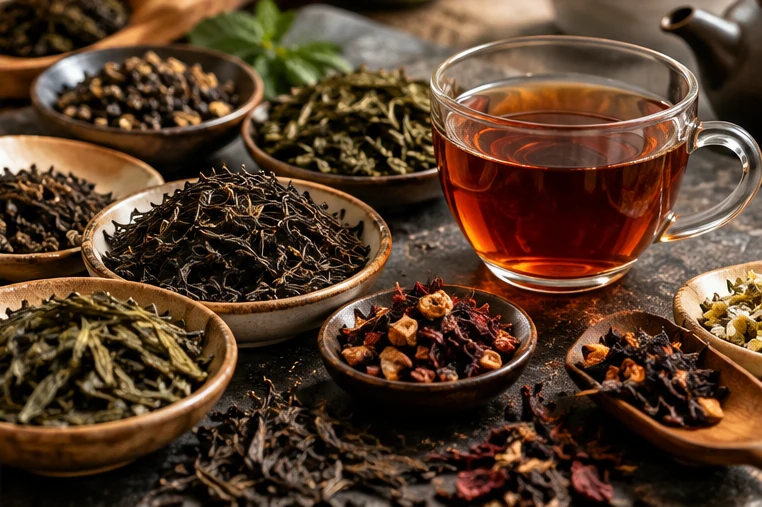
Most familiar green, white, yellow, oolong, black and dark teas come from the tea plant Camellia sinensis. Cultivar, growing conditions and processing change their characteristics. Botanical infusions made with chamomile, ginger or rooibos use different plants.
Use the Tea Atlas for named examples, and the six tea families for the production basics.
China
Six families, many regional languages of tea.
Chinese tea traditions include green, white, yellow, oolong, black and dark teas, and numerous scented and regional styles. The techniques and social practices surrounding these categories were inscribed on UNESCO's Representative List of the Intangible Cultural Heritage of Humanity in 2022.
Source: UNESCO — Traditional tea processing and associated social practices in China
Thailand
Highlands and everyday tea cultures.
Tea cultivation can be found in the northern highlands, including Chiang Rai. Oolong tea is among the varieties grown there. Tea also appears in everyday drinks prepared in quite different ways; an iced milk-tea recipe, for example, is not the same beverage as a plain brewed oolong.
Our directory is still expanding its coverage of individual Thai-grown tea styles. Until that research is complete, it would be misleading to offer a filtered list with no entries or to invent varieties.
Source: Tourism Authority of Thailand — Tea cultivation in Chiang Rai
Japan
Green tea expressed in many styles.
Japan is associated with a wide range of green teas, including sencha, gyokuro, bancha and hojicha. Matcha is powdered tea, traditionally made from processed tencha leaves. These styles differ in leaf production and preparation; none is automatically caffeine-free.
Beyond
One plant, a world of places and rituals.
Tea production and preparation extend from South Asia to East Africa, Taiwan, Southeast Asia and many other places. Assam, Darjeeling, Ceylon tea and Taiwanese oolong are useful starting points, but each name has its own relationship to region, process and preparation. Herbal drinks such as rooibos also belong in the broader world of infusions, while not being Camellia sinensis tea.
Keep exploring without leaving OngTeh.
Go from growing region to preparation, caffeine and evidence without needing a separate search.