
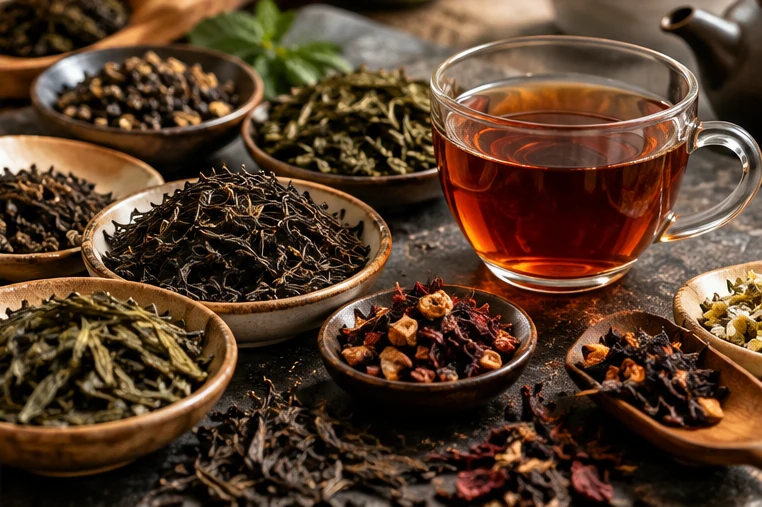
Evidence snapshot: true tea contains caffeine naturally; decaffeination may leave residual caffeine.
Tradition and current beliefs explain why people use a tea or herb; they are not proof of a treatment effect. Research applies only to the specific preparation and dose studied. Results from oil, capsule and extract trials must not be presented as demonstrated benefits of a brewed cup. Sources are linked for independent checking. These guides have not had external clinical peer review.
Naturally caffeine-free
Plain rooibos, barley, peppermint and chamomile are examples of ingredients that do not come from the caffeinated tea plant. A drink consisting only of appropriate naturally caffeine-free ingredients is generally a clearer option for someone trying to avoid caffeine.
Check a blend in full. The words “herbal”, “night”, “light” or “calm” on the front do not guarantee the absence of caffeinated green tea, black tea or other stimulating plants.
Decaffeinated is not always zero
Decaffeinated tea begins with tea leaves and undergoes a process to remove most caffeine. Some residual caffeine can remain. If you must avoid caffeine completely for medical reasons, follow professional advice and read verified product specifications rather than relying on a marketing name.
A simple tea finder can therefore treat “decaf” as a separate choice from “naturally caffeine-free”. That is the distinction OngTeh uses.
“Low caffeine” needs context
Caffeine is influenced by the plant material, serving size, processing and brewing method. Green tea, white tea and hojicha are sometimes described casually as lower caffeine, but names alone cannot guarantee a particular amount. Matcha, for example, involves consuming powdered tea leaf.
Without laboratory values for a particular product and preparation, presenting an exact caffeine figure can be misleading. Avoid claiming that briefly rinsing leaves removes all caffeine.
A simple decision guide
For a night-time routine, choose an appropriate naturally caffeine-free single-ingredient infusion or verified blend. For a daytime tea habit, decide whether some caffeine is acceptable; if so, conventional tea may still fit. When in doubt, read all ingredients and avoid absolute promises.
Frequently asked questions
Does decaf contain caffeine?
It may retain residual caffeine.
Is white tea caffeine-free?
No; white tea comes from Camellia sinensis.
Is herbal tea always caffeine-free?
No. A mix may contain caffeinated tea leaves, yerba mate or other sources.
Sources and further reading
Primary public-health sources for the main claims above. Research on an extract or supplement is not automatically evidence for a brewed beverage.